Ceramic 2.6 OZ Square Dipping Bowl Set
Set of 6 · 3" · 2.6 oz · Ceramic
4.8★ · 1,067 ratings as of August 2026
$19.99
Nora Beckett · Published 24 August 2026 · Updated 24 August 2026
What the small oven-safe dishes are actually used for the rest of the year, and what the lids are and are not for.
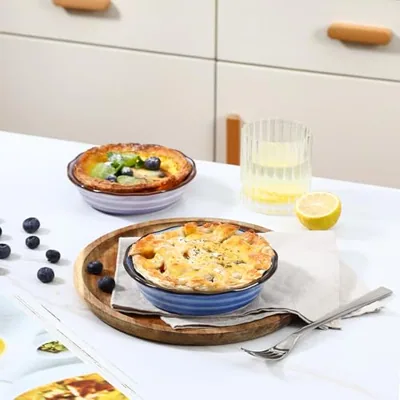
Ramekins and the small pie dishes are the only pieces in this range whose product pages state oven safe. That is worth repeating, because a general bullet about ovens sometimes appears on product pages for tableware that has no business in one.
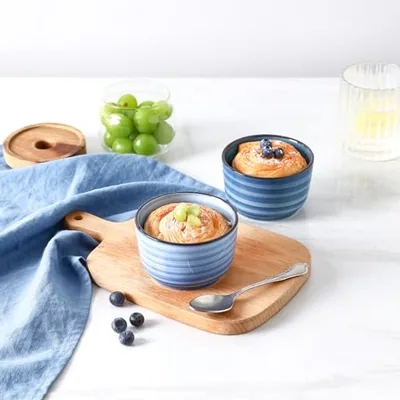
What they do well is anything baked in a single portion: eggs, gratins, cobblers, and yes, brûlée.
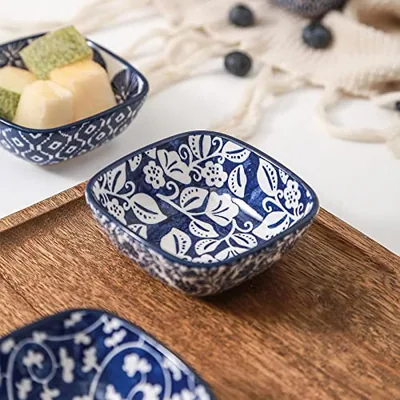
Dips and sauces at a table, prep bowls beside a hob, and portioned leftovers in the fridge. A stack of six ramekins is the most-used thing in a lot of kitchens, and none of that use involves an oven.
They also weigh enough not to slide, which matters more for a dipping dish than any other property.
Set of 6 · 3" · 2.6 oz · Ceramic
4.8★ · 1,067 ratings as of August 2026
Set of 6 · 6 oz · Porcelain
4.7★ · 500 ratings as of August 2026
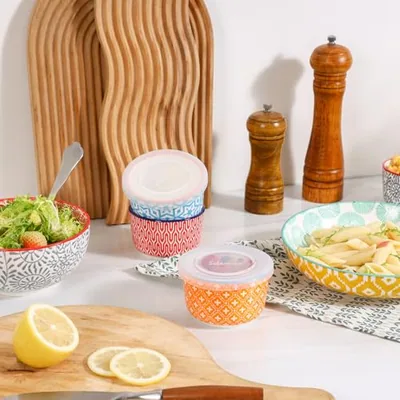
The lids are for the fridge. The product pages state fridge and dishwasher safe for them, and they do not claim the lids are oven pieces, so we do not either.
Owners disagree about how tightly they seat. That is a real spread rather than a defect, and it is worth checking the fit on the first one before filling six.
Six ounces is the standard, and it is the size most recipes assume. Eight ounces is a portion for someone who is hungry, and it changes baking times by a few minutes rather than by a category.
Buy one size and stick to it. Mixed sizes in one oven bake unevenly.
Ramekins get used in pairs and then in fours: two for dips, four for prep, six when something is baked for a table.
A set of six covers all three, and the spare survives the one that gets left in the fridge under a lid for a week.
Nora Beckett writes the guides here. She sets a table most days, has broken more plates than she likes to admit, and measures shelves before she buys anything. What she knows comes from a lot of dishes washed, stacked and occasionally chipped.