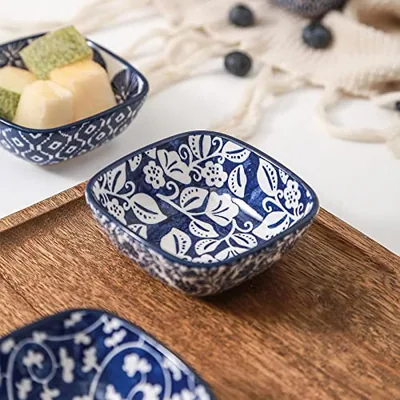
Ceramic 2.6 OZ Square Dipping Bowl Set
Set of 6 · 3" · 2.6 oz · Ceramic
4.8★ · 1,067 ratings as of August 2026
$19.99
Every Selamica glaze is stated to contain no lead and no cadmium, and the fired surface is a watertight layer that resists stains and odours. In a kitchen that means tomato sauce and turmeric wipe off a plate that was rinsed the same evening, and a bowl that held curry on Monday does not smell of it on Tuesday.
Under the glazePattern sits below the fired surface, so a dishwasher cycle takes nothing off it.
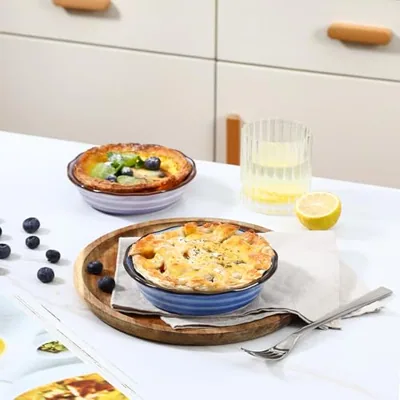
Heat has a shorter listBakeware and ramekins go in the oven. Plates, bowls and mugs do not.
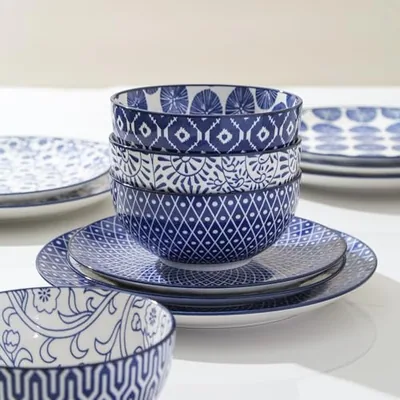
Colour lives under that layer, so it does not fade in a dishwasher the way a printed transfer on top of the glaze does. What wears a printed rim is grit: a scouring pad, or a stack ground together while it is still wet. A soft cloth keeps a pattern looking new for years.
Grit, not waterA scouring pad is what wears a printed rim. A cloth and warm water are enough.
| The wording | What it means at the table |
|---|---|
| Non-lead and non-cadmium glaze | Neither metal is used in the colour or the coating, so acidic food such as tomato or lemon has nothing to lift out of the surface. |
| Watertight glazed finish | The fired layer takes in no liquid, so a bowl that held curry on Monday does not smell of it on Tuesday. |
| Scratch, chip and crack resistant | Resistant, not proof. It describes a hard surface, and a plate that meets a tiled floor still loses. |
| Microwave and dishwasher safe | Both are stated for the tableware. Reheat and wash as normal, and keep the cycle away from a chipped rim. |
| Oven safe | Stated for the bakeware and the ramekins. Plates, bowls and mugs stay out of the oven. |
Wording taken from the pieces themselves, read in August 2026.
Set of 6 · 3" · 2.6 oz · Ceramic
4.8★ · 1,067 ratings as of August 2026
Set of 6 · 6 oz · Porcelain
4.7★ · 500 ratings as of August 2026