10 Inch Kitchen Serving Plates
Set of 6 · 10" · Ceramic
4.8★ · 2,337 ratings as of August 2026
$41.39
Nora Beckett · Published 24 August 2026 · Updated 24 August 2026
Three words that get used as if they meant the same thing, what each one does on a table, and which of them describes the pieces here.
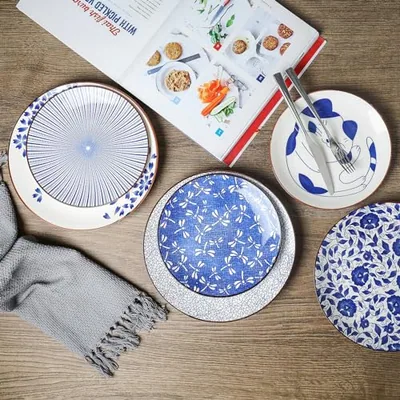
Porcelain is fired hottest, comes out densest and rings when you tap it. Stoneware is fired lower, stays thicker and reads heavier in the hand. Bone china is porcelain with bone ash in the body: lighter, more translucent and the most expensive of the three.
All three are glazed, and the glaze is what makes any of them dishwasher safe. The difference you feel at a table is weight and thickness, not the word on the box.
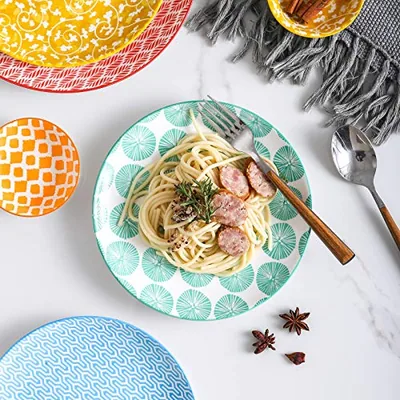
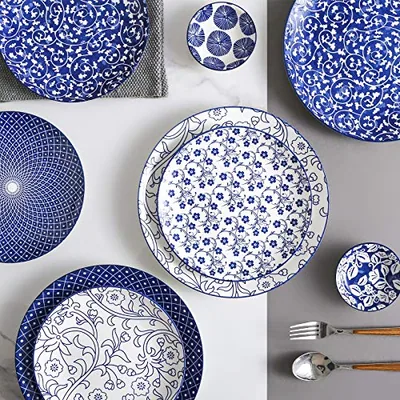
The range is printed porcelain and ceramic, and each piece carries its own material beside its size. Porcelain pieces ring when tapped and hold heat a little longer under a sauce. Ceramic pieces sit slightly thicker at the rim.
What runs through both is the weight. Owners describe the plates as heavy for their size, and that weight is what keeps a plate still on a table rather than skating when you cut.
Set of 6 · 10" · Ceramic
4.8★ · 2,337 ratings as of August 2026
Set of 6 · 10" · Porcelain
4.8★ · 2,337 ratings as of August 2026
Set of 6 · 10" · Porcelain
4.8★ · 2,337 ratings as of August 2026
Set of 6 · 8" · Porcelain
4.8★ · 2,337 ratings as of August 2026
A dense body chips less easily than a porous one, and a thick rim survives a knock better than a thin one. Neither makes a plate chip-proof, and the product pages say resistant rather than proof for exactly that reason.
The practical difference is where the damage lands. Thin bone china chips in flakes at the rim. Heavier printed porcelain more often survives the same knock and passes it to whatever it hit.
If a plate feels light and thin, it will be easier to carry a stack of and easier to break. If it feels heavy, it will sit still, warm slower and cost you more in a full cupboard.
The pieces here sit at the heavier end, so the stack heights matter: six plates take up more shelf than you might expect.
A heavy plate is harder to break and harder to carry six of. That trade sits behind every choice on this page, and it is worth making on purpose rather than by accident.
If a household washes by hand, weight is a daily cost. If it uses a machine, weight is free and stability is the only thing you notice.
Nora Beckett writes the guides here. She sets a table most days, has broken more plates than she likes to admit, and measures shelves before she buys anything. What she knows comes from a lot of dishes washed, stacked and occasionally chipped.