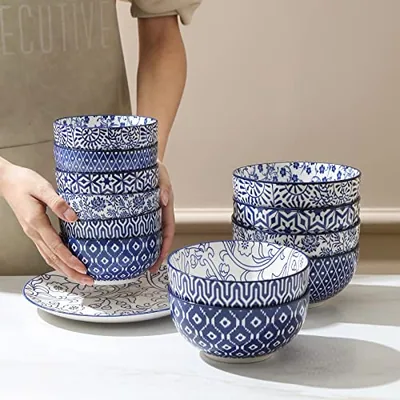
3.3 Inch Soy Sauce Dish Ceramic Dipping Bowls Side Dishes Small
Set of 12 · 3.3" · 2.5 oz · Ceramic
4.8★ · 400 ratings as of August 2026
$29.99
Nora Beckett · Published 24 August 2026 · Updated 24 August 2026
What the phrase describes, what it cannot promise, and the three habits that actually decide how long dinnerware lasts.

It describes hardness. A dense, well-fired body with a hard glaze survives contact that would mark a softer one, and that is a real property you can feel in the weight.
What it is not is a guarantee. Resistant means it takes more to damage. Proof would mean it cannot be damaged, and no one making tableware claims that in writing.
Almost never in use. They happen at the sink, in the stack and in the dishwasher basket, and in all three cases it is contact between two hard things, usually a rim against a rim.
The second most common place is the box. A piece that arrives chipped was chipped in transit, and that is a return rather than a fault of the material.
Set of 12 · 3.3" · 2.5 oz · Ceramic
4.8★ · 400 ratings as of August 2026
Set of 6 · 4.7" · 12 oz · Ceramic
4.8★ · 467 ratings as of August 2026
Set of 6 · 4.7" · 12 oz · Ceramic
4.8★ · 467 ratings as of August 2026
Set of 6 · 4.7" · 12 oz · Ceramic
4.8★ · 1,192 ratings as of August 2026
Stack dry. Do not rinse against the tap. Do not load plates so they can rattle against one another.
That is the whole list, and it is worth more than any claim on a product page. The pieces that survive years in a busy kitchen are the ones that never got the chance to hit anything.
A chipped rim on a glazed piece exposes the body, which then stains. It is not dangerous, but it will not get better, and a chipped plate is best demoted to holding things rather than serving food.
Singles are how you replace one piece rather than a set, and that is the argument for buying a spare set early rather than hunting one later.
A chipped rim does not end a plate, but it changes what the plate is for: the exposed body stains, and a stained edge looks worse each month.
That is the practical argument for buying a spare early. A single replacement piece is cheap. Matching a discontinued pattern two years later is not.
Nora Beckett writes the guides here. She sets a table most days, has broken more plates than she likes to admit, and measures shelves before she buys anything. What she knows comes from a lot of dishes washed, stacked and occasionally chipped.