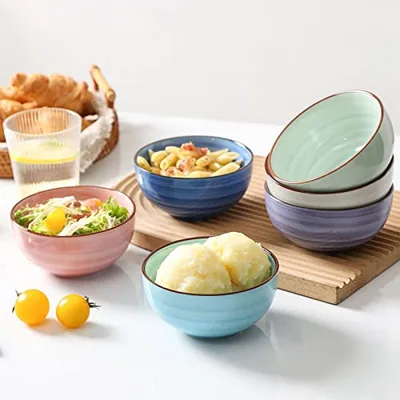
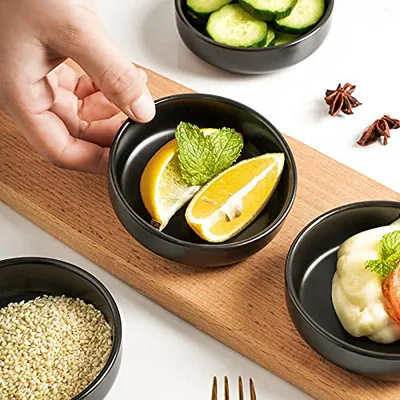
3.3 Inch Soy Sauce Dish Ceramic Dipping Bowls Side Dishes Small
Set of 12 · 3.3" · 2.5 oz · Ceramic
4.8★ · 400 ratings as of August 2026
$29.99
Nora Beckett · Published 24 August 2026 · Updated 24 August 2026
What a wide shallow bowl holds in real food, how it differs from a cereal bowl, and when the bigger 34 or 50 oz sizes make sense.
Twenty-six ounces to the brim is a generous single portion of pasta, a large salad, or soup for one with room to spare. Filled to two thirds, which is how a wide bowl is meant to be used, it is about a pound of cooked pasta.
The number on a product page is the brim capacity, so plan on filling less than it says.
A wide shallow bowl cools food faster and shows it better. A deep bowl keeps soup hot and stops a fork from pushing rice over the edge.
The range has both. If a bowl is going to hold cereal in the morning and pasta at night, the deeper one wins.
Set of 12 · 3.3" · 2.5 oz · Ceramic
4.8★ · 400 ratings as of August 2026
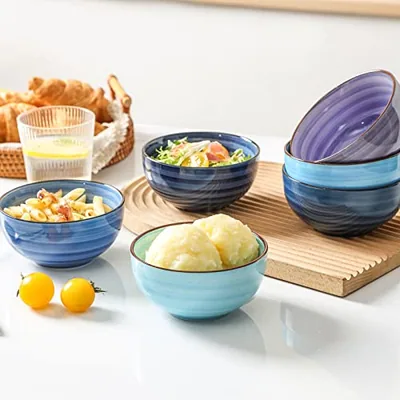
Set of 6 · 4.7" · 12 oz · Ceramic
4.8★ · 467 ratings as of August 2026
Set of 6 · 4.7" · 12 oz · Ceramic
4.8★ · 467 ratings as of August 2026
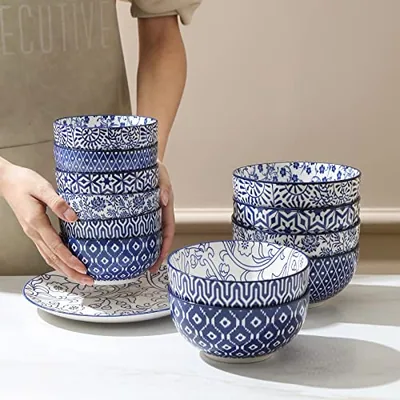
Set of 6 · 4.7" · 12 oz · Ceramic
4.8★ · 1,192 ratings as of August 2026
The 34 and 50 oz bowls in the range are serving bowls in everything but name. They hold a salad for a table rather than a plate for one person.
They are also heavy when full, which is the argument for putting them on the table rather than carrying them around it.
Bowls get used more than plates in most kitchens, and the 74 bowls in the range cover everything from ice cream to serving.
A table of six wants six eating bowls and one serving bowl. A household of two wants four, because two of them are always in the machine.
A wide bowl on a table doubles as a serving dish, and that is the argument for buying one size larger than a portion needs.
The limit is weight. A 50 oz bowl full of salad is heavy enough that it should be placed once and left there.
A wide bowl is a shelf problem as much as a table one. Six of the 26 oz bowls sit lower than six plates because the curve nests, and a set that nests badly is the one that ends up on the counter. Nest a pair before the cupboard door closes and you will know within a second.
If a bowl is going to hold a portion for one, the shape that stacks is worth more than the extra ounce of capacity. The rim is what carries: a bowl with a wide flat rim takes a stack of five without the weight landing in the middle.
Nora Beckett writes the guides here. She sets a table most days, has broken more plates than she likes to admit, and measures shelves before she buys anything. What she knows comes from a lot of dishes washed, stacked and occasionally chipped.