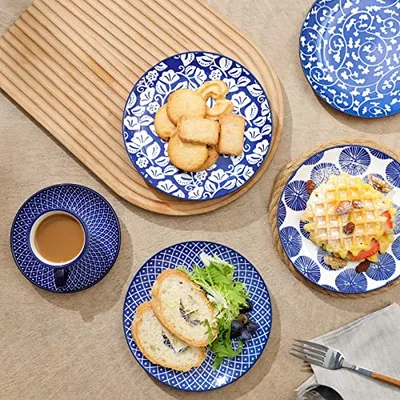
30-Pieces Ceramic Dinnerware Sets for 6
Set of 30 · 10" · 26 oz · Ceramic
4.7★ · 1,407 ratings as of August 2026
$159.99
Nora Beckett · Published 24 August 2026 · Updated 24 August 2026
How to use a cobalt print in a room that is not a country kitchen: what to pair it with, and what to leave out.
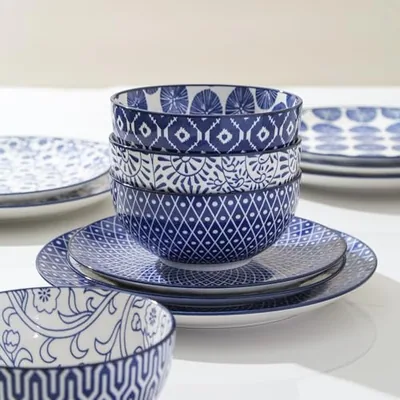
Cobalt on white is a four-hundred-year-old idea, and the eye knows it. That is the whole appeal, and it is also the trap: add gingham and a wooden dresser and the table becomes a costume.
The fix is not less blue. It is fewer of the things that arrive with it by default.
Plain linen, grey stone, clear glass and matte black metal. All four are modern materials that let the pattern be the oldest thing on the table.
Wood is not banned, but one wooden element is enough. Two makes a farmhouse.
Set of 30 · 10" · 26 oz · Ceramic
4.7★ · 1,407 ratings as of August 2026
Set of 4 · 6" · 5 oz · Porcelain
4.8★ as of August 2026
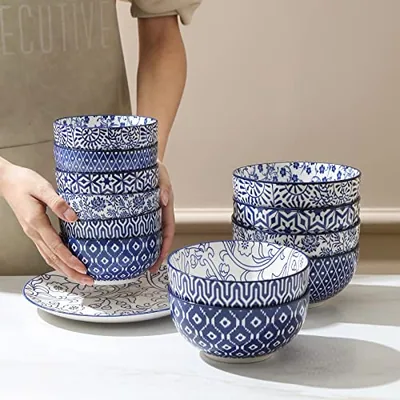
Set of 6 · 4.7" · 12 oz · Ceramic
4.8★ · 1,192 ratings as of August 2026
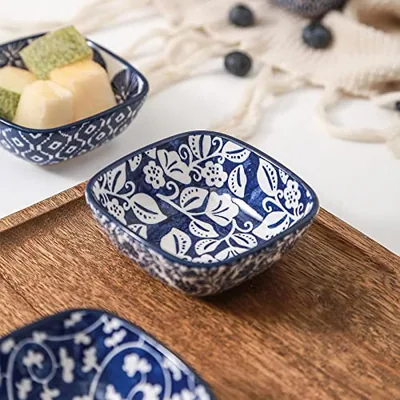
Set of 6 · 3" · 2.6 oz · Ceramic
4.8★ · 1,067 ratings as of August 2026
A dense small print reads almost as texture from standing height, and that is why it works under food. Save the wide open patterns for the pieces that stay empty.
Leave space between patterned pieces. A crowded table makes every print louder.
The colour line beside the blue one is the easiest modern move: a pink or green bowl on a cobalt plate reads as a decision rather than as a leftover.
What does not work is two busy prints from different lines touching. One of them has to be plain.
Cobalt reads warm under a bulb and cool under daylight, and the same plate can look navy at noon and near-black at night.
If a room has one dim corner, keep the plain pieces there and the patterned ones where the light lands.
The blue line is wide enough to furnish a whole table, which makes it tempting to buy everything at once. The tables that look collected rather than bought were assembled a piece at a time.
A practical order: plates first, because they set the tone, then bowls, because they get used most, and serving pieces last, because one good platter does the work of three ordinary ones.
Nora Beckett writes the guides here. She sets a table most days, has broken more plates than she likes to admit, and measures shelves before she buys anything. What she knows comes from a lot of dishes washed, stacked and occasionally chipped.